Introduction to Chemoinformatics Laboratory
This laboratory was founded in 1992 at the Department of Applied Chemistry (the present Chemistry Department) of the University of Science and Technology of China (USTC). Its predecessor was the Computer Chemistry Research Laboratory led by Prof. Maosen Zhang. It is mainly engaged in the teaching and research of chemoinformatics (computational chemistry, chemometrics). In early 2005, the laboratory was relocated to the Department of Chemistry at Nankai University along with the transfer of main staff members.
The laboratory has conducted in-depth research on the application of various chemoinformatics methods in the field of chemistry. We have published more than 500 papers in domestic and international academic journals, and edited, translated, or co-published 5 academic books. We pioneered the research of wavelet analysis in analytical chemistry signal resolution, and established immune algorithms for processing complex analytical chemistry signals. We have also carried out research on near-infrared (NIR) spectroscopy analysis methods for practical complex systems, establishing a series of chemometric methods for NIR spectral signal processing and modeling. Fast NIR analysis methods and product quality evaluation methods for complex systems were established, providing novel analytical methods for the rapid analysis of complex mixtures. In recent years, we mainly focus on temperature-dependent NIR spectroscopy and aquaphotomics (water spectral probes), which expands the research scope of NIR spectroscopy. By applying chemometric methods to molecular simulation studies, we established highly efficient optimization algorithms and applied them to the structural optimization of atomic/molecular clusters as well as the molecular simulation of host-guest systems, obtaining innovative results. Furthermore, we proposed various new enhanced sampling algorithms for molecular simulations based on physical principles and deep learning, providing new tools to study complex biological and chemical processes at the atomic level. We also proposed accurate methods for calculating protein-ligand binding free energies, which have been widely used by the community. Currently, the main research areas of this laboratory include: (1) Novel chemometric methods and their applications; (2) Hyperspectral and aquaphotomics analysis based on deep learning; (3) Computational chemistry methods in molecular simulations; (4) Analytical methods for complex systems.
The laboratory welcomes undergraduate students, master's and doctoral students, as well as postdoctoral researchers. Up to now, more than 100 master's and doctoral students have graduated from the laboratory.
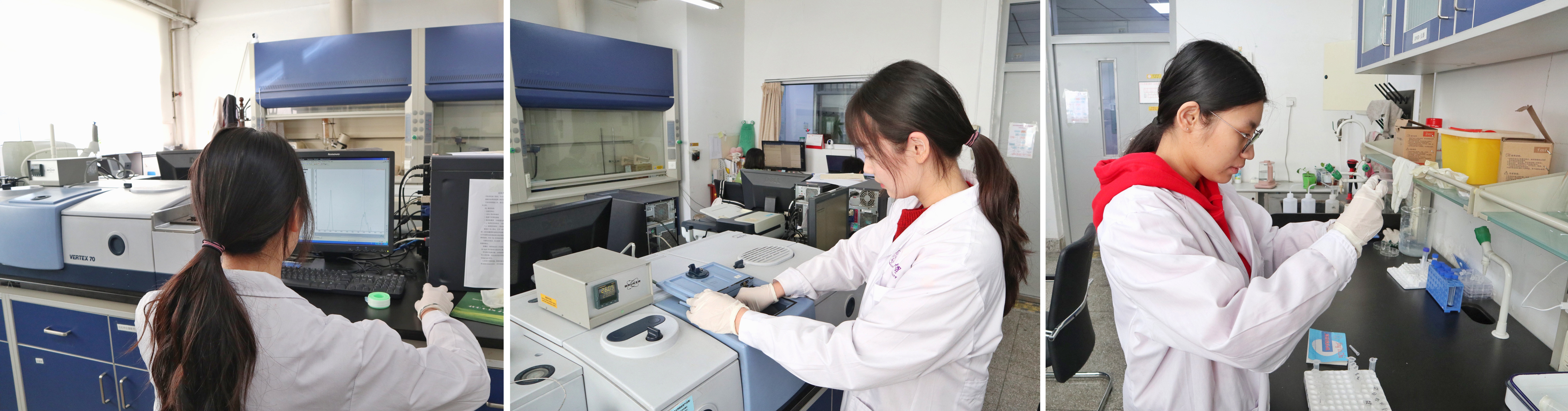
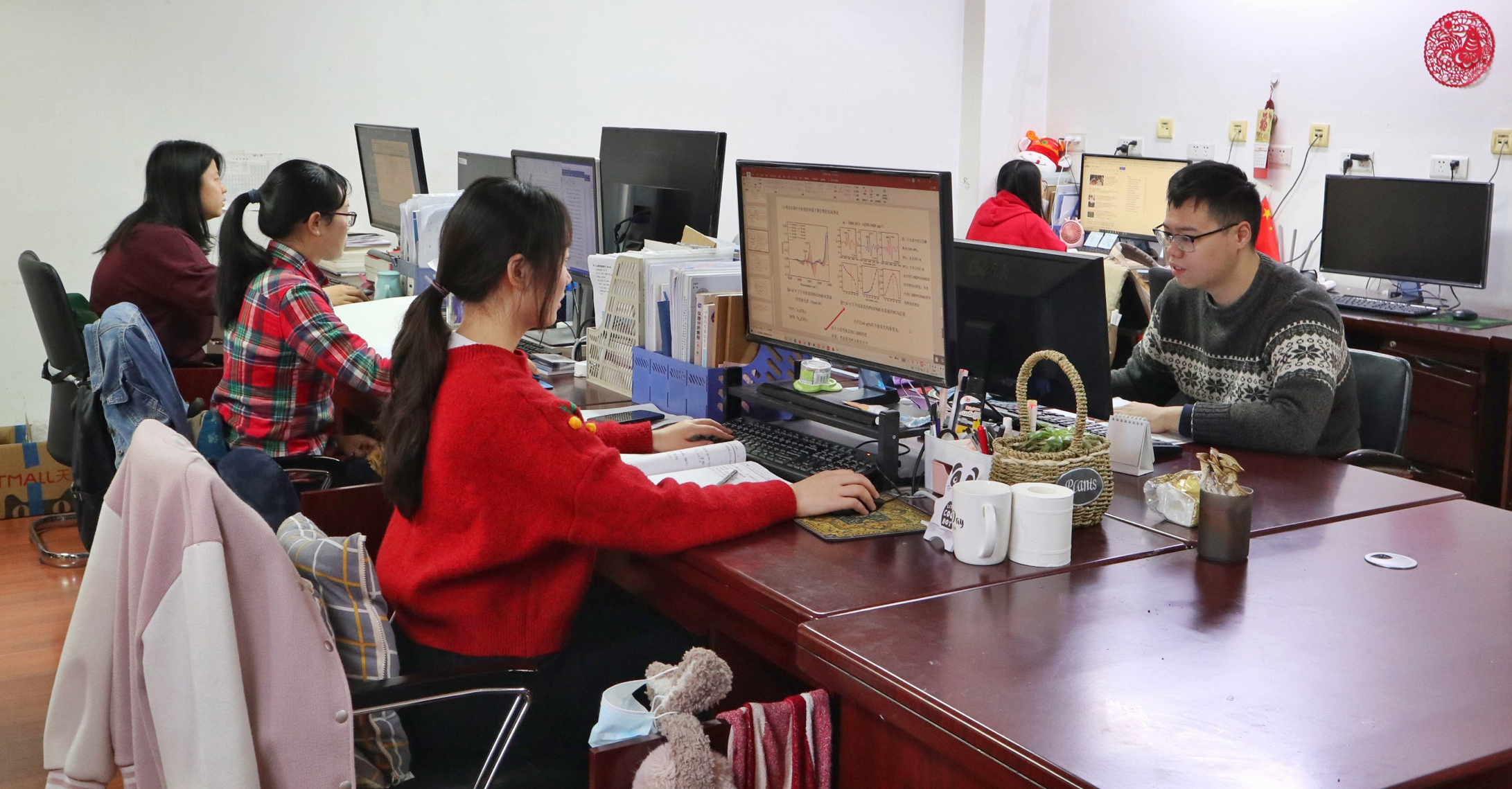
The laboratory is equipped with excellent experimental and computational facilities. We have analytical instruments such as an FT-IR/NIR spectrometer (Bruker Vertex 70), a GC-MS system (Finnigan PolarisQ), and an HPLC system (Waters 1525). Computing equipment includes a Dell high-performance server cluster (2 GPUs per node), MSI GPU workstations, DELL workstations, and Lenovo PCs. Meanwhile, public university resources can be conveniently utilized to conduct various chemical tests and large-scale computations.